Whether you’re managing pastures, maintaining a lawn, or keeping roads and driveways clear in winter, spreaders are one of those tools that do a lot of quiet, unglamorous work that adds up to big results over time. Getting material distributed evenly, whether it’s fertilizer, seed, lime, or ice melt, makes a real difference in how effective it is. Too thin and you’re wasting a trip; too heavy in spots and you’re burning grass or spending more than you need to. The right spreader for your operation saves time, covers ground efficiently, and gives you consistent results every time you go out.
A walk-behind unit and a PTO-driven spreader are solving very different problems. Scale, material type, terrain, and how you're powering the operation all factor into which style makes sense for your situation. Getting that right from the start means less overlap, fewer missed spots, and a lot less time going back over areas that weren't covered the way they should have been.
What You'll Find in Our Spreader Selection
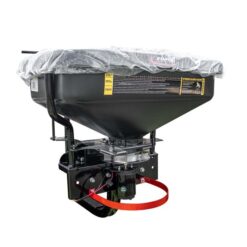
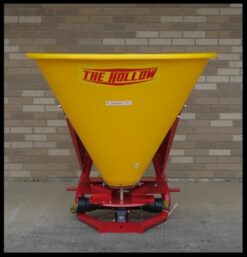
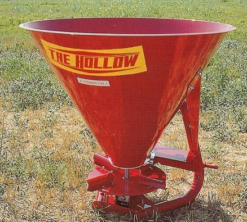
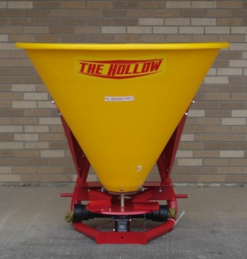
We carry spreaders for various applications, from fertilizer spreaders that handle large-scale PTO-driven distribution across pastures and fields, to lawn spreaders for property-level coverage, to salt spreaders built for ice control in winter conditions. Brands include Bush Hog, AgLine, Tufline, Herd, Power Line, and Ariens, covering both pull-type and PTO configurations in a variety of hopper materials and capacities.
Common features and options include:
PTO-driven spreaders for tractor-powered distribution over large acreage
Pull-type spreaders for tow-behind use with ATVs or small tractors
Walk-behind models for smaller areas and targeted applications
Metal and poly hopper options for different material types and durability needs
Stainless steel construction on select models for corrosion resistance
Variable spread width adjustment for coverage control
Lid options to protect material from moisture during transport
Hopper capacities ranging from lighter-duty residential use to large farm applications
Compatibility with common materials, including fertilizer, lime, seed, and ice melt
Why Folks Count on Safford for Spreaders and More
We carry spreaders for farmers, property owners, and commercial customers. The brands in our lineup are built for working conditions. When you call us, we're going to ask what you're spreading, how much ground you're covering, and what equipment you're running. Those details matter when you're choosing between a PTO unit and a pull spreader, or deciding on hopper size and material. We'd rather spend a few minutes getting you pointed at the right tool than have you end up with something that doesn't quite match what you're doing.
Find the Right Spreader at Safford Equipment
Get better coverage in less time with a high-quality spreader from Safford Equipment. Give us a call at (877) 872-2417, send us a message, or stop by and see what we have in stock. We'll help you find the right spreader for your needs.
Shop All Farm & Garden Equipment
FAQs: Spreaders
Here are some straightforward answers to common questions about spreaders.
What's the difference between a PTO spreader and a pull spreader?
A PTO spreader mounts to your tractor's 3-point hitch and is driven by the tractor's power take-off shaft. It's built for higher-capacity work across larger acreage and handles heavier, denser materials more consistently. A pull spreader is towed behind a tractor, ATV, or utility vehicle and operates on its own ground-driven or wheel-driven mechanism. Pull spreaders are more versatile across different equipment and tend to be a good fit when you don't need the full capacity of a PTO unit.
What materials can I run through a spreader?
Most of the spreaders in our lineup are built to handle granular materials: fertilizer, lime, grass seed, and ice melt are the most common. The key is matching the material to the spreader's design. Stainless steel hoppers are worth considering if you're regularly spreading salt or ice melt, since those materials are highly corrosive to standard steel over time.
How do I calibrate a spreader for accurate coverage?
Calibration is a matter of setting the spread rate for your specific material and target application, then verifying coverage with a test run. Most spreaders have an adjustable gate or flow control that regulates how much material exits the hopper per unit of distance traveled. Always consult your spreader's manual for the calibration procedure. The right settings vary considerably between material types and desired application rates.
Can I use the same spreader for fertilizer and salt?
Technically, yes, but it's not ideal, especially if your spreader has a standard steel hopper or components. Salt is highly corrosive and will shorten the life of metal parts that weren't designed for it. If you plan to spread both, look for a spreader with stainless steel construction or make sure to thoroughly flush and clean the equipment after every salt application.